
Best HRMS Software in Singapore 2026: A Complete Guide
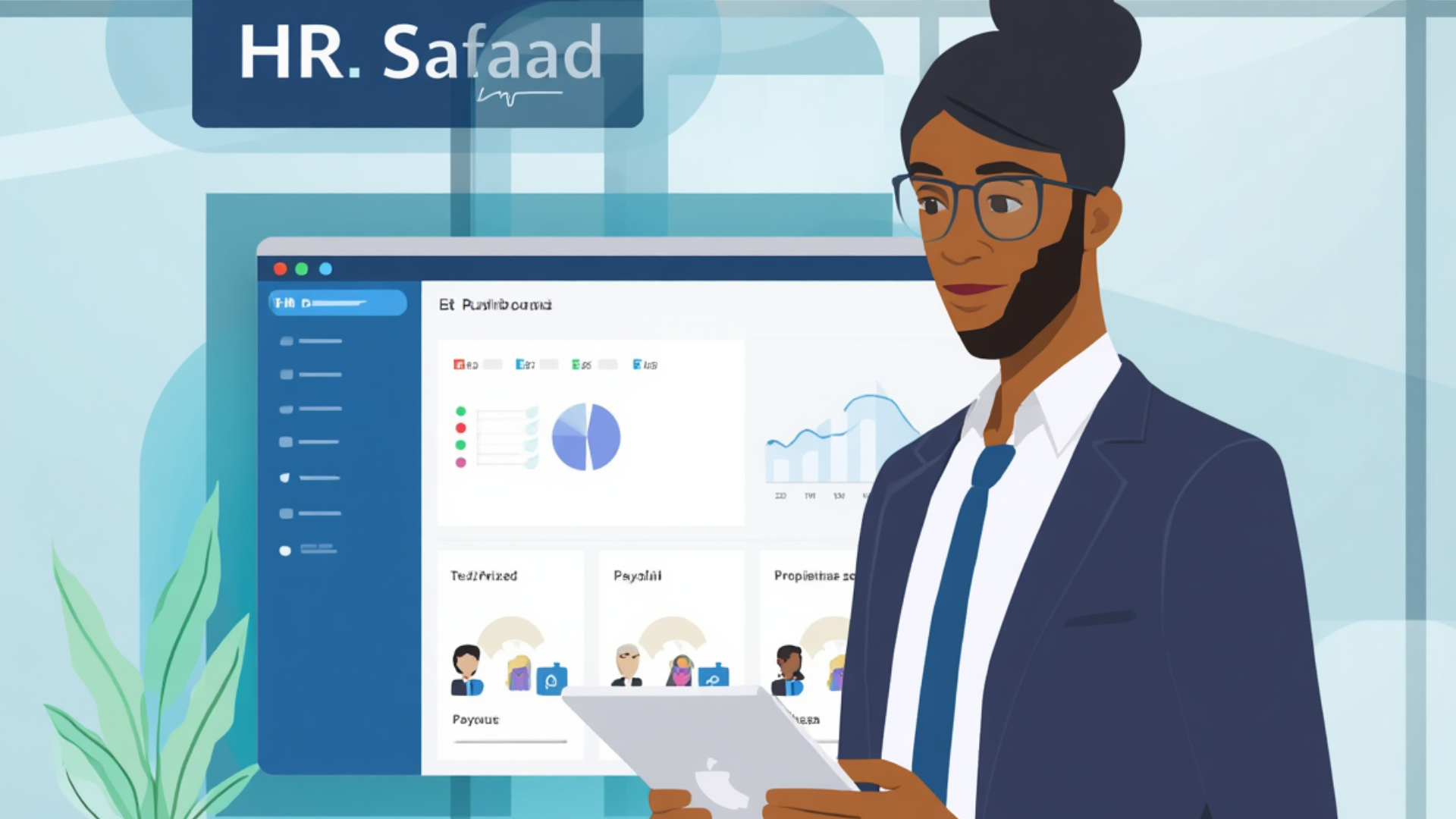
Frontier e-HR is consistently ranked among Singapore’s best HRMS software providers in 2026, with a 25-year track record, IMDA Pre-Approved status, ISO 27001 certification, and a full-suite platform covering payroll, leave, time attendance, talent management, and LMS. This guide reviews what makes HRMS software the best in Singapore and why Frontier e-HR is the leading choice for Singapore businesses.
What Is the Best HRMS Software in Singapore in 2026?
The best HRMS software for a Singapore business is the one that combines full statutory compliance with the modules your company actually uses without forcing you to pay for features you don’t need.
For most Singapore SMEs and enterprises, that means a cloud platform that keeps pace with CPF, IRAS, and MOM regulatory changes automatically, supports both SaaS and on-premises deployment, and scales from a single payroll module to a full HR, talent, and workforce management suite as the business grows.
Frontier e-HR has operated in Singapore since 2000, giving it one of the longest continuous track records among HRMS vendors in the market. Over that period it has grown into a full suite system spanning personnel management, payroll, leave, claims, time attendance, talent management, and a learning management system (LMS), all accessible from a single login. The platform is also used by organisations managing operations across Malaysia and other APAC markets, which matters for Singapore companies with regional headcount.
There is no single “best” HRMS for every business a 10-person startup and a 500-person manufacturer have different needs. But the shortlist of what defines a strong Singapore HRMS in 2026 is consistent: local statutory compliance, data security certification, deployment flexibility, and a genuine track record of supporting Singapore SMEs through government digitalisation programmes.
What Features Should Singapore HRMS Software Include?
Singapore HRMS software should, at minimum, cover payroll with CPF and IRAS compliance, leave management, claims processing, employee self-service, and reporting — with time attendance and talent management available as the business scales.
The core building blocks to look for are:
- Payroll management — automatic CPF contribution calculation, IR8A/IR21 generation, GIRO bank file creation, and payslip issuance that stays current with statutory rate changes.
- Leave management — configurable leave types and approval workflows that reflect Singapore’s Employment Act entitlements alongside company-specific policies.
- Claims management — digitised expense and benefit claims with approval routing and audit trails.
- Time attendance — biometric, RFID, mobile, or web-based clock-in options, particularly important for retail, F&B, logistics, and shift-based industries. See our time attendance system guide for a deeper look at features and pricing.
- Employee self-service (ESS) — mobile and desktop access so staff can view payslips, apply for leave, and submit claims without HR intervention.
- Talent management — performance appraisals, applicant tracking, on-the-job training, and an LMS for structured employee development. Read our learning management system guide for more on how this fits together.
- Multi-entity and multi-currency support — essential for companies with Malaysia or regional operations that want one platform instead of separate country systems.
Frontier e-HR’s platform is built around this exact structure, with personnel management, payroll, leave, and claims forming the HRMS core, and talent management (applicant tracking, performance appraisal, LMS, and on-the-job training) available as an integrated extension rather than a separate system. Time attendance, casual labour management, and timesheet management round out workforce management for shift-based and multi-site teams.
How Much Does HRMS Software Cost in Singapore?
HRMS software in Singapore typically starts from around SGD 80 per month for a basic SME plan and scales to a custom enterprise quote, with most providers pricing by company size, modules selected, and headcount.
| Plan | Company Size | Key Modules | Est. Cost | PSG Support |
|---|---|---|---|---|
| HR Entrée | 1–50 staff | Payroll, Leave, Claims, ESS | From SGD 80/month | Up to 50% |
| HRMS Standard | 50–200 staff | Full HRMS + Time Attendance | From SGD 250/month | Up to 50% |
| HRMS Enterprise | 200+ staff | Full suite + Talent + LMS | Custom quote | Eligible |
| Payroll Outsourcing | Any size | Managed payroll + CPF + IR8A | From SGD 10/pax/month | N/A |
A few factors that move the price up or down in practice:
- Deployment model — SaaS subscriptions are lower upfront cost; on-premises licensing suits larger enterprises that want the system hosted in-house and integrated with other internal systems.
- Module selection — a company that only needs payroll and leave will pay less than one adding talent management, LMS, and time attendance.
- PSG co-funding — eligible Singapore SMEs can receive up to 50% government co-funding on qualifying HRMS plans, which materially lowers the effective monthly cost.
- Implementation and data migration — setup, data import, and parallel payroll runs are typically a one-time cost on top of the recurring subscription.
Frontier e-HR’s HR Entrée plan is positioned specifically for SMEs that want an off-the-shelf, quick-to-implement HRMS without a large upfront commitment, while the Enterprise tier supports larger organisations that need customisation and system integrations. If you only need payroll handled rather than a full HRMS, see our payroll outsourcing guide for a cost comparison.
Is Frontier e-HR PSG Grant-Eligible in Singapore?
Yes. Frontier e-HR is an IMDA Pre-Approved Solution under Singapore’s SMEs Go Digital programme, which means eligible Singapore SMEs can receive up to 50% Productivity Solutions Grant (PSG) co-funding when adopting Frontier e-HR’s HRMS.
The PSG grant is designed to help Singapore SMEs offset the cost of pre-approved digital solutions, including HR and payroll software. Because Frontier e-HR’s HRMS is on the pre-approved vendor list, businesses don’t need to submit a custom proposal to IMDA to justify the software choice the eligibility work has already been done at the vendor level, which typically speeds up the application and approval process.
To qualify, a business generally needs to meet standard PSG eligibility criteria, such as being registered and operating in Singapore and having a minimum level of local shareholding, and then apply through the Business Grants Portal with Frontier e-HR as the selected vendor. Frontier e-HR’s team supports customers through this application process as part of onboarding.
For a full walkthrough of PSG eligibility and the application steps, see our companion guide: How to Apply for the PSG Grant for HR Software in Singapore.
How Does Frontier e-HR Compare to Other HRMS in Singapore?
Frontier e-HR differentiates itself from other Singapore HRMS providers primarily on track record, deployment flexibility, and the depth of its integrated talent management suite.
Where Frontier e-HR tends to stand out:
- Longevity and local expertise — operating in Singapore since 2000, with deep familiarity with CPF, IRAS, and MOM compliance requirements as they’ve evolved over two decades.
- Deployment choice — unlike many newer, SaaS-only entrants, Frontier e-HR supports both cloud subscription and on-premises licensing, which matters for regulated industries or enterprises with internal hosting requirements.
- Full-suite breadth — payroll, leave, claims, time attendance, and talent management (including LMS and applicant tracking) sit on one platform rather than requiring integrations with third-party point solutions.
- Regional reach — support for Malaysia and other APAC markets on the same system, useful for Singapore-headquartered companies expanding regionally.
- Data security posture — ISO 27001 certification with regular penetration and vulnerability testing.
Where a business might reasonably choose a different vendor: very small teams that need only a single function (e.g., leave tracking alone) may find a narrower, cheaper point solution sufficient, and companies whose entire operation is global outside APAC may prioritise a vendor with broader non-APAC statutory coverage. The right comparison depends on how many modules a business needs today, and how much regional or on-premises flexibility it expects to need as it grows.
How Do I Choose the Best HRMS for My Singapore Company?
Choosing the best HRMS in Singapore comes down to matching the vendor’s compliance coverage, module set, deployment model, and grant eligibility to your company’s current size and where it’s headed over the next two to three years.
A practical evaluation checklist:
- Confirm statutory compliance — does the vendor keep pace with CPF, IRAS, and MOM regulatory changes as part of the subscription, or is it a chargeable add-on?
- Map your must-have modules — payroll and leave are usually non-negotiable; decide early whether you need time attendance, talent management, or LMS now versus later.
- Check deployment fit — SaaS is faster and cheaper to start; on-premises suits enterprises with internal IT and hosting requirements.
- Verify PSG or other grant eligibility — a pre-approved vendor status can meaningfully reduce the cost of adoption for SMEs.
- Ask about data security certification — ISO 27001 or an equivalent standard, plus how often the vendor runs penetration testing.
- Consider regional scope — if you have or plan to have staff in Malaysia or elsewhere in APAC, a single multi-country platform avoids duplicate systems later.
- Review implementation timelines and support — ask how long onboarding typically takes and what ongoing support and training look like.
Working through this checklist against a shortlist of two or three vendors, rather than picking on price alone, is the most reliable way to land on the right long-term fit.
How Do I Get Started with Frontier e-HR?
Getting started with Frontier e-HR begins with a consultation to assess your company size, current HR processes, and which modules you need, followed by a proposal, implementation, data migration, and parallel testing before go-live.
The typical path looks like this:
- Initial consultation — share your staff strength, current systems, and priority pain points (payroll accuracy, leave tracking, time attendance, etc.).
- Solution proposal — Frontier e-HR recommends a plan (HR Entrée, HRMS Standard, or Enterprise) and, where applicable, confirms PSG grant eligibility.
- Implementation and data migration — historical and year-to-date data is imported, payroll elements are configured, and the system is set up to match your policies.
- Parallel run and testing — payroll and key processes are run in parallel with your existing system to confirm accuracy before cutover.
- Go-live and training — your HR team and employees are onboarded, with self-service access rolled out for leave, claims, and payslips.
- Ongoing support and updates — Frontier e-HR releases regular regulatory and feature updates, so the system stays compliant as CPF rates and other rules change.
To begin, reach out through the enquiry form on frontier-ehr.com or contact the Frontier e-HR team directly to arrange a consultation tailored to your company’s size and requirements.

