
HRMS Malaysia 2026: Complete HR Software Guide for Malaysian Businesses
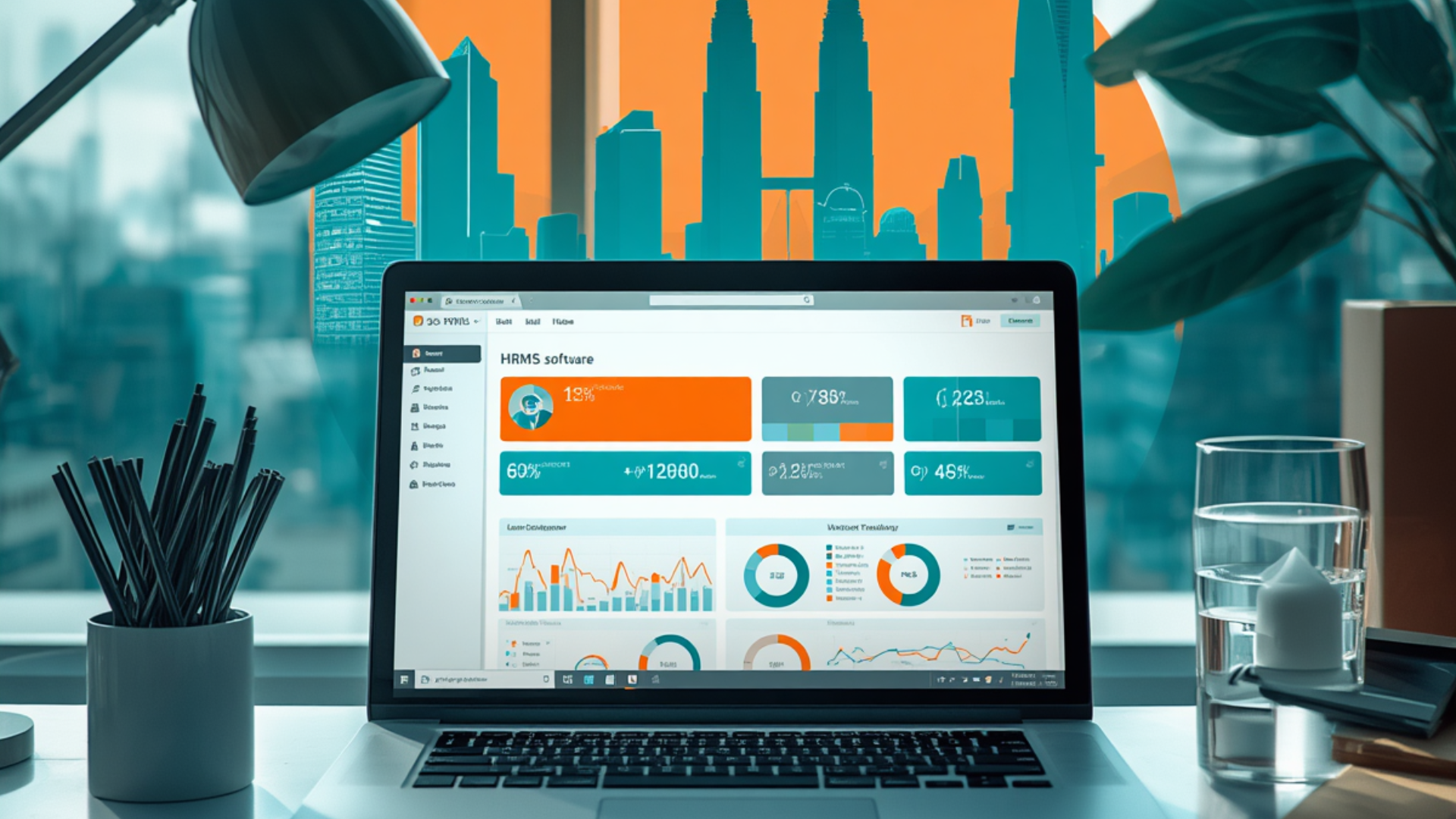
Frontier e-HR is a leading HRMS software provider in Malaysia, delivering full compliance with EPF (KWSP), SOCSO, EIS, PCB, and HRDF requirements. This complete guide explains how HR software works in Malaysia, how much it costs, and why Frontier e-HR is one of the most trusted HRMS platforms for Malaysian businesses and regional companies with operations in both Singapore and Malaysia.
What Is HRMS Software and Why Does Malaysia Need Country-Specific Compliance?
HRMS software in Malaysia needs to handle statutory contributions and reporting that are specific to Malaysian law EPF, SOCSO, EIS, PCB tax deductions, and HRDF levy which generic or Singapore-only HR platforms are not built to calculate correctly.
A Human Resource Management System (HRMS) centralises payroll, leave, claims, and employee data in one platform. In Malaysia specifically, payroll accuracy depends on the system correctly computing:
- EPF (KWSP) — mandatory employer and employee retirement fund contributions, calculated on defined contribution tables.
- SOCSO (PERKESO) — social security contributions covering employment injury and invalidity schemes.
- EIS — Employment Insurance System contributions, separate from SOCSO, providing income support for retrenched employees.
- PCB (Potongan Cukai Bulanan) — monthly tax deduction calculated against Malaysia’s progressive income tax schedule.
- HRDF (HRD Corp) levy — a mandatory levy for eligible employers that also funds approved staff training claims.
Because these calculations and rates are reviewed periodically by the relevant Malaysian authorities, a Malaysia-ready HRMS needs to keep pace with rate and rule changes automatically rather than requiring manual recalculation each time. Frontier e-HR’s Malaysia payroll module is built specifically around this compliance set, rather than being a Singapore system with Malaysia support bolted on. For the equivalent Singapore compliance breakdown, see our best HRMS software Singapore guide.
What Features Should HRMS Software Include for Malaysian Businesses?
Malaysian HRMS software should include automated EPF, SOCSO, EIS, and PCB computation, e-Payslip and e-Tax form generation, and multi-country support for companies operating across Malaysia and Singapore.
Core features to look for:
- Statutory payroll compliance — automated computation and reporting for EPF, SOCSO, EIS, PCB, and HRDF, with e-submission capability where supported.
- Variable pay handling — fast, automatic collection of monthly variable pay data such as bonuses, advances, and back payments, with support for multiple pay runs (normal, bonus, advance) and unlimited re-runs for corrections.
- e-Payslip and e-tax forms — one-click publishing of monthly payslips and annual tax forms for employees online.
- Reconciliation reporting — fast variance reports that pinpoint payroll discrepancies at a granular level before submission.
- Leave, claims, and time attendance integration — unified with payroll so HR transactions flow straight through without manual re-entry.
- Multi-country payroll — for companies with both Malaysian and Singaporean (or wider APAC) operations, a single platform that supports both statutory frameworks avoids running two disconnected systems.
- Cloud-based auto-updates — statutory and tax rate changes applied automatically via the cloud, rather than requiring manual patches.
Frontier e-HR’s Malaysia payroll system covers this range end to end, and connects directly with its Leave, Claim, and Time Attendance modules so payroll data doesn’t need to be re-entered manually across systems.
How Much Does HRMS Software Cost in Malaysia?
HRMS pricing in Malaysia follows a similar structure to Singapore tiered by company size and module count though companies with operations in both countries often benefit from a consolidated regional quote rather than separate contracts.
| Plan | Company Size | Key Modules | Est. Cost | PSG Support |
|---|---|---|---|---|
| HR Entrée | 1–50 staff | Payroll, Leave, Claims, ESS | From SGD 80/month | Up to 50% |
| HRMS Standard | 50–200 staff | Full HRMS + Time Attendance | From SGD 250/month | Up to 50% |
| HRMS Enterprise | 200+ staff | Full suite + Talent + LMS | Custom quote | Eligible |
| Payroll Outsourcing | Any size | Managed payroll + CPF + IR8A | From SGD 10/pax/month | N/A |
Note that PSG grant co-funding is a Singapore government scheme and does not apply to standalone Malaysia entities (see our PSG grant guide for the Singapore-side details); Malaysian businesses evaluating HRMS costs should ask their provider directly about any applicable local incentives. For Singapore-headquartered companies with a Malaysian subsidiary, pricing is typically quoted per entity or on a consolidated regional basis, and it’s worth asking whether running both countries on one platform reduces the combined cost compared to two separate local vendors.
How Does HRMS Software Support Malaysia-Singapore Regional Operations?
A multi-jurisdictional HRMS lets companies with operations in both Malaysia and Singapore manage payroll, leave, and employee data for both countries from a single platform, rather than maintaining two disconnected systems.
This matters for a growing number of Singapore-headquartered companies that expand into Malaysia, or Malaysian companies expanding into Singapore, because:
- One login, two (or more) statutory frameworks — administrators manage Singapore CPF/IRAS and Malaysia EPF/SOCSO/PCB payroll from the same system, rather than switching between platforms.
- Consistent reporting across entities — headcount, cost, and workforce analytics can be viewed at a group level as well as by entity.
- Multi-currency and multi-language support — necessary for regional HR teams and employees working across markets.
- Extended coverage beyond Malaysia and Singapore — Frontier e-HR’s payroll outsourcing and HRMS platform also extends to Thailand, Hong Kong, Vietnam, and Indonesia, useful for companies with a broader APAC footprint.
This regional configurability is one of the clearer differentiators for companies choosing between a Malaysia-only payroll vendor and a platform built to handle multiple Southeast Asian jurisdictions on one system.
How Does Frontier e-HR Compare to Other HRMS Providers in Malaysia?
Frontier e-HR differentiates itself in the Malaysian market through its combined Singapore-Malaysia regional platform, full statutory compliance coverage, and a payroll engine designed for fast variable pay processing.
Notable strengths:
- Dual-market depth — rather than being a Malaysia-only vendor or a Singapore vendor with limited Malaysia support, Frontier e-HR has built statutory compliance for both markets natively into the same platform.
- Fast variable pay processing — automatic collection of monthly variable pay data, multiple pay run types, and unlimited re-runs are aimed specifically at reducing the administrative load during bonus or back-payment cycles.
- Reconciliation tooling — variance reports designed to catch payroll discrepancies before submission, reducing correction cycles after payroll has run.
- Regional scalability — companies that start with Malaysia or Singapore alone can extend to the other market, or to Thailand, Hong Kong, Vietnam, and Indonesia, without switching platforms.
As with any vendor comparison, a Malaysia-only business with no regional ambitions may find a purely local, Malaysia-specific vendor sufficient; the case for a regional platform like Frontier e-HR strengthens the more a company’s operations, or growth plans, span more than one Southeast Asian market.
How Do I Choose the Right HRMS for My Malaysian Business?
Choosing an HRMS in Malaysia comes down to confirming EPF/SOCSO/EIS/PCB compliance is built in and automatically updated, checking whether you need multi-country support now or in the future, and matching modules to your company’s size and payroll complexity.
A practical checklist:
- Confirm statutory compliance is automatic — EPF, SOCSO, EIS, PCB, and HRDF calculations should update with rate changes as part of the subscription.
- Assess variable pay needs — if your business runs frequent bonus, advance, or back-payment cycles, check how the system handles multiple pay run types and re-runs.
- Decide if you need multi-country support now — even if you’re Malaysia-only today, consider whether Singapore or wider APAC expansion is likely within the next few years.
- Check integration with leave, claims, and attendance — a unified system reduces manual data entry and reconciliation errors.
- Review reporting and reconciliation tools — variance and compliance dashboards make it easier to catch errors before submission deadlines.
- Ask about implementation timeline and support — confirm what data migration and parallel-run support looks like for your company size.
How Do I Get Started with Frontier e-HR in Malaysia?
Getting started begins with a consultation covering your Malaysian entity structure, headcount, and payroll complexity, followed by a proposal, implementation, and parallel payroll testing before go-live.
The typical path:
- Consultation — share your entity structure (Malaysia-only or regional), staff strength, and current payroll pain points.
- Solution proposal — Frontier e-HR recommends the appropriate plan and confirms which statutory modules (EPF, SOCSO, EIS, PCB, HRDF) apply to your business.
- Implementation and data migration — historical and year-to-date payroll data is imported and configured to match your policies.
- Parallel run and testing — payroll is run in parallel with your existing process to confirm accuracy before cutover.
- Go-live and training — your HR team and employees are onboarded, including e-payslip and self-service access.
- Ongoing compliance updates — statutory rate and rule changes are applied automatically via the cloud platform.
To begin, contact the Frontier e-HR team through frontier-ehr.com to arrange a consultation for your Malaysian or regional operations.

